
Cabarrus County Tax Records
Cabarrus County property tax records are available through the Tax Administration office in Concord. The county handles property assessment and tax collection for all municipalities, including Concord and parts of Kannapolis. Residents can search for property tax records by owner name, parcel number, or address. Cabarrus County conducts revaluations every four years, which is more frequent than the state minimum. This helps keep property tax records accurate and close to current market values. Searching these records gives property owners a clear view of assessed values and tax obligations.
Cabarrus County Quick Facts
Cabarrus County Tax Administration
The Cabarrus County Tax Administration manages property assessment and collection for the entire county. This office determines the taxable value of all real and personal property. It also collects property taxes on behalf of the City of Concord and other local jurisdictions.
All property in Cabarrus County is assessed at 100% of fair market value as of January 1, the tax lien date. The North Carolina Machinery Act in Chapter 105 of the General Statutes governs how the county carries out this work. The North Carolina Department of Revenue supervises local tax programs under G.S. 105-289, and Cabarrus County follows these state standards. Staff at the tax office can help you understand your property tax records, explain your assessed value, and guide you through any forms you need to file.
| Office |
Cabarrus County Tax Administration 65 Church Street SE Concord, NC 28025 |
|---|---|
| Hours | Monday through Friday, 8:00 AM to 5:00 PM |
Cabarrus County Property Revaluation
Cabarrus County revalues all property every four years. This is more frequent than the eight-year minimum set by G.S. 105-286. More frequent revaluations mean that Cabarrus County property tax records stay closer to actual market conditions.
During a revaluation year, the tax office reviews every parcel in the county. Appraisers look at recent sales, property condition, and location to determine market value. Owners receive a notice showing their new assessed value. If you think the value is wrong, you have the right to appeal. The revaluation process updates all Cabarrus County property tax records at once, which can lead to noticeable changes in some tax bills.
Between revaluation years, the county still adjusts property tax records for new buildings, additions, and demolitions. If you build a new house or add a garage, the assessed value changes. Cabarrus County tracks these changes to keep property tax records current throughout the four-year cycle.
Note: The four-year revaluation cycle in Cabarrus County means property values may change more often than in counties that use the eight-year cycle.
Searching Property Tax Records in Cabarrus County
Cabarrus County provides online access to property tax records. You can search by owner name, address, or parcel identification number. The system shows assessed values, tax amounts, and whether the bill has been paid.
For a more detailed look, visit the tax office in Concord. Staff can pull up the full property record, which includes the assessment card, tax history, and any exemptions or deferrals. The Cabarrus County Register of Deeds maintains ownership records such as deeds and plats that complement what you find in property tax records. Both offices are open to the public during normal business hours. Property tax records in Cabarrus County are public information, and you can search any parcel regardless of whether you own it.
Online searches are a fast way to check your property tax records. In-person visits let you ask questions and get printed copies. Call ahead if you need certified documents from Cabarrus County.
Cabarrus County Property Tax Appeals
Property owners in Cabarrus County can appeal their assessed value if they believe it is too high. The appeal process gives you a chance to present evidence and ask for a review.
Start with an informal appeal at the Cabarrus County tax office. Meet with an appraiser and discuss your concerns. Bring supporting documents such as a recent appraisal, comparable sales data, or photos of property damage. Many disputes are settled at this stage without a formal hearing. If the informal review does not resolve the issue, you can file a formal appeal with the Cabarrus County Board of Equalization and Review under G.S. 105-322.
The Board of Equalization and Review meets each year during a set period. They hear evidence from both the property owner and the tax office. The board can raise, lower, or keep the value as is. Decisions from the board can be appealed further to the North Carolina Property Tax Commission under G.S. 105-288. This state body provides another level of review for Cabarrus County property tax records disputes.
Tax Relief for Cabarrus County Owners
Several tax relief programs exist for qualifying property owners in Cabarrus County. The Elderly or Disabled Exclusion under G.S. 105-277.1 reduces the taxable value for homeowners age 65 and older or those who are totally and permanently disabled. The Circuit Breaker program under G.S. 105-277.1B limits the property tax to a share of the owner's income. Disabled veterans may exclude up to $45,000 from their assessed value.
Farm, forest, and horticultural land owners in Cabarrus County may apply for the Present-Use Value program under G.S. 105-277.2. This program values qualifying land based on its current agricultural or forestry use rather than its potential development value. The result is often a much lower assessed value in the property tax records. Applications for all relief programs are due by June 1 each year on Form AV-9.
- Elderly or Disabled Exclusion under G.S. 105-277.1
- Circuit Breaker income limit under G.S. 105-277.1B
- Disabled Veteran exclusion up to $45,000
- Present-Use Value for farms and forests
Note: Tax relief approvals are reflected in Cabarrus County property tax records and carry forward each year as long as you still qualify.
How Cabarrus County Tax Bills Work
Your property tax bill in Cabarrus County is calculated using a simple formula. Divide the assessed value by 100. Then multiply by the tax rate. The result is your annual tax for that jurisdiction.
Most properties in Cabarrus County pay both a county tax rate and a municipal rate. If your home is inside the city limits of Concord or Kannapolis, you pay the city rate on top of the county rate. Special district taxes may also apply in some areas. Your property tax records show each rate that applies to your parcel and the total amount owed. Tax bills go out in August. Payment is due September 1, and taxes become delinquent on January 6.
The January 1 tax lien date means the person who owns property on that date is responsible for the full year of property tax in Cabarrus County. If property changes hands during the year, the buyer and seller typically prorate the tax at closing. However, the county sends the bill to the owner on record as of the lien date.
North Carolina Property Tax Resources
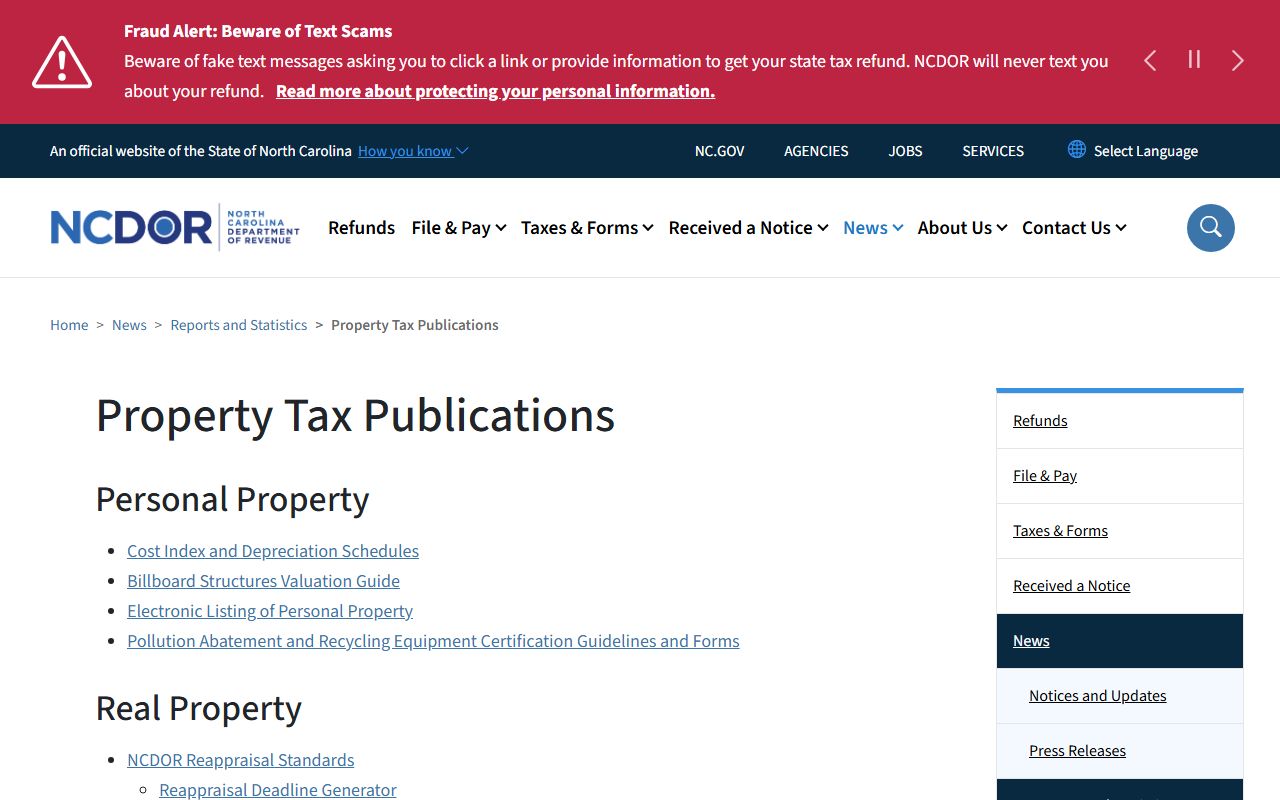
The North Carolina Department of Revenue oversees property tax administration statewide. Their website has forms, guides, and legal references that apply to Cabarrus County. Property owners can download exemption applications, appeal forms, and instructional materials directly from the NCDOR site.
The General Statutes Chapter 105 contains all the laws that govern property tax in North Carolina. This includes the Machinery Act, which sets the procedures Cabarrus County follows for assessing and collecting property taxes. These statutes define your rights as a property owner when reviewing your Cabarrus County property tax records.
Cities in Cabarrus County
Cabarrus County includes several municipalities. Concord is the county seat and largest city. Parts of Kannapolis also fall within Cabarrus County. Other towns include Harrisburg, Mount Pleasant, Midland, and Locust. Property tax records for all of these areas are maintained by the Cabarrus County Tax Administration.
Nearby Counties
These counties border Cabarrus County. If your property is near a county line, verify which county manages your property tax records before contacting the tax office.