
Find Clay County Property Tax Records
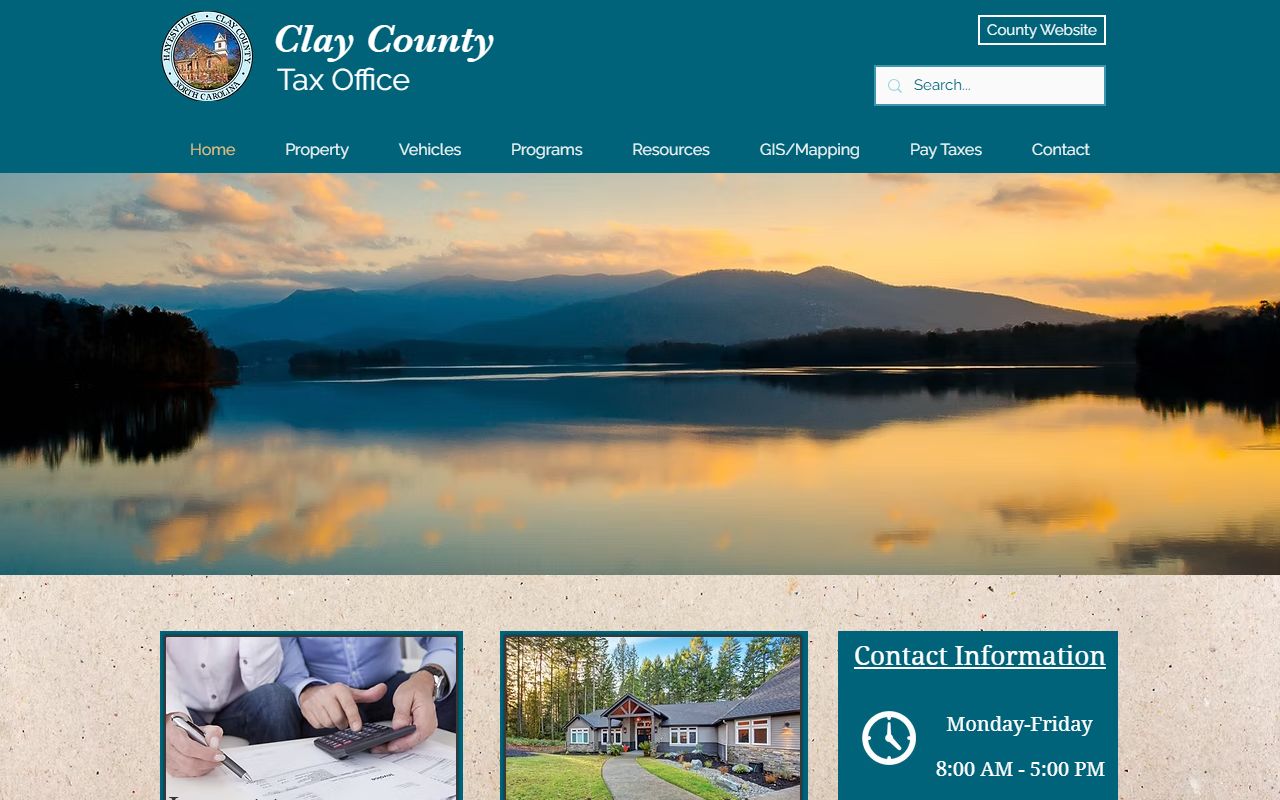
Clay County property tax records are managed by the Tax Office in Hayesville, North Carolina. Located in the far western mountains, Clay County is one of the smallest counties in the state. The Clay County Tax Office handles property and vehicle taxes, relief programs, foreclosures, and online payments. You can search property tax records, view tax bills, and make payments through the county's online system. The office is open Monday through Friday from 8:00 AM to 5:00 PM at 261 Courthouse Drive, Suite 3, in Hayesville.
Clay County Property Tax Facts
Clay County Tax Office Services
The Clay County Tax Office provides a range of services for property owners. You can search property record cards, look up tax bills, make payments, print listings, and get information about foreclosures. The office also handles appeals of assessed values, tax relief applications, and deferment programs. You can download real estate files and view tax-exempt property data through the Clay County tax system.
| Office |
Clay County Tax Office 261 Courthouse Dr, Suite 3 Hayesville, NC 28904 Phone: (828) 389-1266 |
|---|---|
| Hours | Monday through Friday, 8:00 AM to 5:00 PM |
| Website | tax.claync.us |
The Clay County Tax Office serves a community with a median household income of $59,863. The median home value in Clay County is $263,300 based on 2023 data. The largest share of property owners pay between $800 and $1,499 per year in property taxes, while the median annual tax bill is around $4,024. These figures reflect the mountain real estate market in Clay County.
Search Clay County Property Tax Records Online
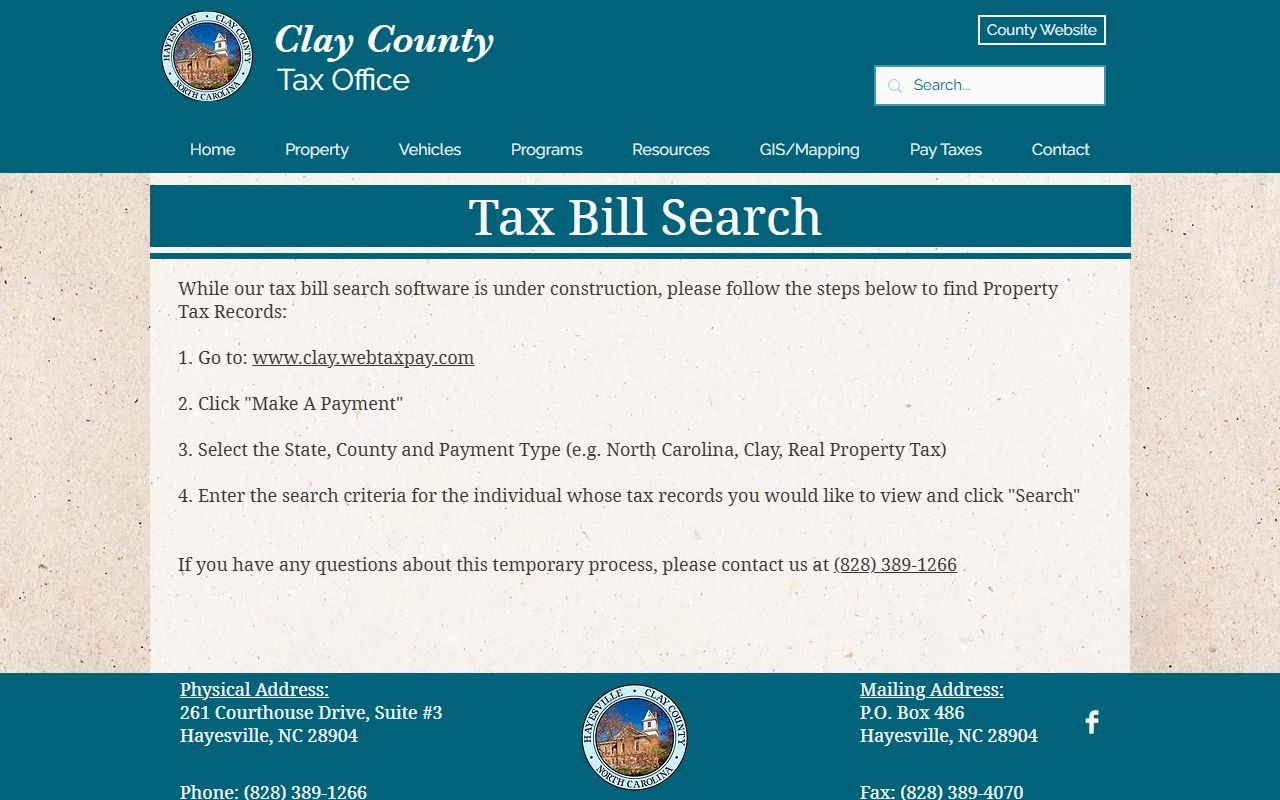
The easiest way to find Clay County property tax records is through the online portal. Go to tax.claync.us/tax-bill-search to look up tax bills by owner name, parcel ID, or address. The system shows the current bill, past due amounts, and payment history. You can also view property details and the assessed value for each parcel in Clay County.
Property tax records in Clay County are public. Anyone can search them. You do not need to own the property or have a special reason. The records show the owner name, property address, land value, building value, total assessed value, tax rate, and the amount billed. North Carolina law requires all property to be assessed at 100% of fair market value, and Clay County follows this standard under the Machinery Act.
If you cannot find what you need online, call the Clay County Tax Office at (828) 389-1266. Staff can search property tax records and answer questions about bills, values, and payments. You can also visit the office in person in Hayesville.
Note: The online system at Clay County may not reflect payments made within the last few business days, so contact the office for real-time balance information.
Pay Clay County Property Taxes
Clay County property tax bills go out in August. They are due September 1. You have until January 5 to pay without a late charge. After that date, the bill is delinquent and interest begins to add up. Clay County property tax records track all payment dates and balances.
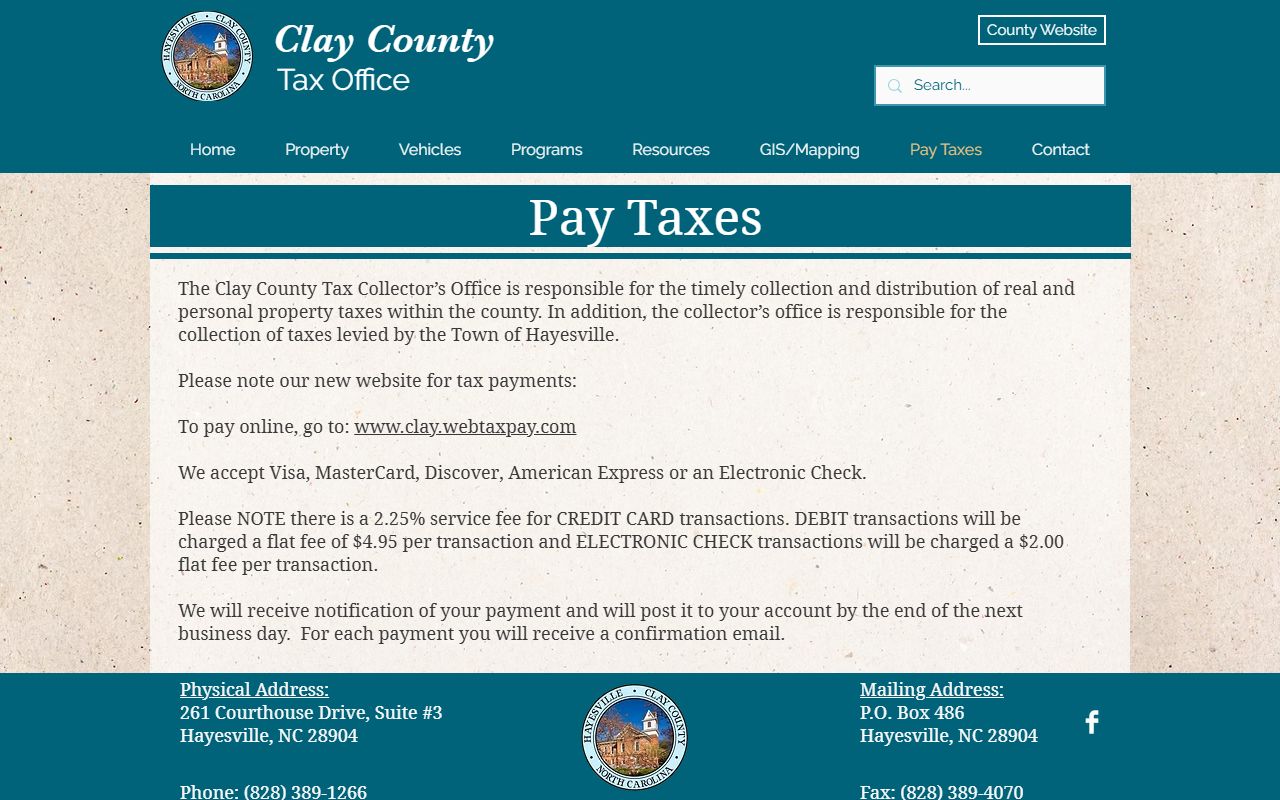
You can pay your Clay County property taxes online at tax.claync.us/pay-taxes. The site accepts electronic payments. You can also pay in person at the Tax Office in Hayesville or by mail. The office accepts cash, checks, and money orders. Keep your receipt. It serves as proof of payment in your Clay County property tax records.
If taxes go unpaid for too long, Clay County can begin foreclosure proceedings under G.S. 105-374. The Tax Office provides information about properties in foreclosure. This is a serious step. Pay on time to avoid it.
Clay County Property Tax Assessments
The Clay County tax assessor determines the value of every taxable parcel. Real property includes land, homes, and buildings. All real property in Clay County is assessed at 100% of market value as of January 1 each year. The tax formula is straightforward. Divide the assessed value by 100, then multiply by the county tax rate. That gives you the annual tax bill shown in Clay County property tax records.
Clay County must conduct a reappraisal of all real property at least every eight years under G.S. 105-286. The North Carolina Department of Revenue supervises this process under G.S. 105-289. During a reappraisal, the county reviews sales data, building costs, and market trends to set new values. Property owners in Clay County receive a notice when their value changes. This is the time to review the new assessment and decide if you want to appeal.
Personal property is also taxed in Clay County. Boats, unregistered motor vehicles, and business equipment must be listed with the tax office by January 31. Late listings get a 10% penalty. Clay County property tax records include both real and personal property.
Note: If you make improvements to your property, such as adding a room or building a garage, report them to the Clay County tax office so your records stay accurate.
Appeal Property Tax Values in Clay County
You can appeal your assessed value in Clay County if you believe it is too high. Start with an informal review at the Tax Office. Bring evidence like a recent appraisal, comparable sales, or photos of property issues. The staff will look at your case and may adjust the value.
If the informal step does not work, file an appeal with the Clay County Board of Equalization and Review under G.S. 105-322. The board meets in the spring to hear disputes. You must appear during the board's session and present your evidence. The board reviews the facts and makes a ruling. Their decision will update your Clay County property tax records if the value changes.
Beyond the county level, you can take your case to the North Carolina Property Tax Commission under G.S. 105-288. This state body handles appeals that are not resolved locally. The process is more formal. Many property owners hire an attorney or a tax consultant for this stage. Clay County property tax records reflect any changes from the appeals process at every level.
Clay County Tax Relief Programs
Several tax relief programs can reduce your Clay County property tax bill. These are set by North Carolina law and administered by the Clay County Tax Office. The deadline to apply is June 1 each year. Use Form AV-9, available at the tax office or the NCDOR website.
The programs that Clay County property owners may qualify for include:
- Elderly or Disabled Exclusion under G.S. 105-277.1 for homeowners who are 65 or older or totally and permanently disabled
- Circuit Breaker Deferment under G.S. 105-277.1B, which limits taxes to a share of income for qualifying seniors or disabled persons
- Disabled Veteran Exclusion of up to $45,000 off assessed value
- Present-Use Value program under G.S. 105-277.2 for farms, forests, and horticultural land
Given the rural and mountainous nature of Clay County, the Present-Use Value program is used by many landowners. It lets qualifying farms and forestland be taxed based on the income the land can produce rather than its market sale price. This can cut the tax bill by a large amount. The Clay County Tax Office can walk you through the requirements.
North Carolina Tax Laws for Clay County
All property taxes in Clay County are governed by Chapter 105 of the North Carolina General Statutes. You can read the full text at the General Assembly website. Key sections include G.S. 105-286 on reappraisal schedules, G.S. 105-322 on local appeals boards, and G.S. 105-374 on tax foreclosure. These laws set the framework that the Clay County Tax Office must follow.
The North Carolina Department of Revenue also publishes guides and forms for property owners. Visit the NCDOR property tax page for relief applications, listing forms, and answers to common questions. Clay County property tax records are part of this statewide system, even though each county handles its own assessment and collection.
Nearby Counties
These counties are next to Clay County. Property near a border may fall under a different county's tax office. Check the parcel location to find the right office for your property tax records.