
Halifax County Property Tax Records
Halifax County property tax records are maintained by the county Tax Office in Halifax, the county seat. The Tax Office is responsible for listing, appraising, and assessing all taxable real and personal property within Halifax County. Residents and property owners can search property tax records through the county or by visiting the office in person. Halifax County is located in northeastern North Carolina along the Roanoke River. The area has a rich history dating back to the colonial era, and property records here span many decades of ownership and valuation data.
Halifax County Quick Facts
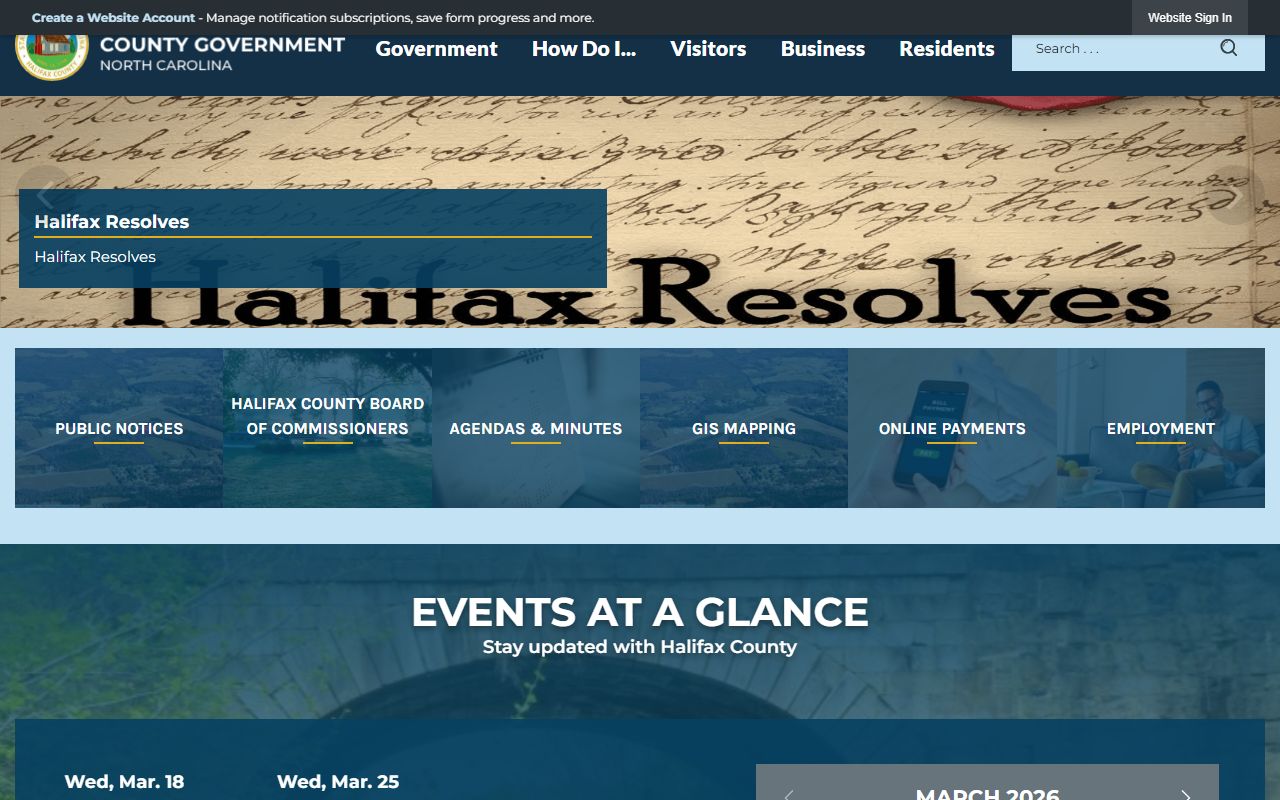
Halifax County Tax Office
The Halifax County Tax Office handles all property tax records for the county. Staff members list and appraise real property, business personal property, and individual personal property. The office also processes exemptions and exclusions for qualifying property owners. All taxable property in Halifax County is assessed at 100% of fair market value as required under North Carolina law and G.S. 105-289.
The tax lien date is January 1 each year. The value of your property on that date sets your tax obligation for the entire year. Tax bills in Halifax County are mailed in August and are due by September 1. Taxes become delinquent on January 6 of the following year. Interest and penalties begin to accrue on delinquent accounts. The Halifax County Tax Office can provide current and past billing records, assessed values, and payment history for any parcel in the county.
| Office |
Halifax County Tax Office Halifax, NC County Administrative Building |
|---|---|
| Hours | Monday through Friday, 8:30 AM to 5:00 PM |
| Website | halifaxnc.com |
Searching Halifax County Property Tax Records
You can search Halifax County property tax records in several ways. The county may offer an online property search portal through the North Carolina Property Tax System. This tool lets you look up parcels by owner name, address, or parcel identification number. Results typically show the assessed value, tax amount, and ownership details for each property in Halifax County.
For in-person searches, visit the Halifax County Tax Office during business hours. Staff can pull up records and provide printed copies. Bring a property address or owner name to speed up your search. The Halifax County Register of Deeds also maintains deed records, which show ownership transfers and liens. These records complement property tax records and help build a full picture of a parcel's history.
Note: Online search tools may not include every detail found in the official file. For complete Halifax County property tax records, contact the Tax Office directly.
Property Tax Assessment in Halifax County
Halifax County assesses all property at fair market value. The Assessor uses sales data from the area, cost approaches, and income methods for commercial parcels. North Carolina law under G.S. 105-286 requires counties to reappraise all real property at least once every eight years. Halifax County follows this schedule to keep values current with market trends.
During a revaluation year, every parcel in Halifax County is reviewed. Owners receive notices with the new assessed value. If your property has changed due to new construction, demolition, or land splits, the value may be adjusted outside the revaluation cycle. The formula for your tax bill is straightforward. Take the assessed value, divide by 100, and multiply by the tax rate. That gives you the amount owed for the year on your Halifax County property tax bill.
Personal property is also taxable. This includes vehicles, boats, and business equipment. Halifax County residents must list personal property each January. Failure to list on time can result in a 10% penalty on the assessed value.
Halifax County Tax Appeals
Property owners in Halifax County have the right to appeal their assessed value. Start with an informal review at the Tax Office. Explain why you think the value is incorrect and bring supporting evidence. Comparable sales data and a recent independent appraisal are strong evidence.
If the informal review does not resolve the dispute, file a formal appeal with the Board of Equalization and Review under G.S. 105-322. The board meets each year to hear appeals. After the board rules, you can take your case to the Property Tax Commission under G.S. 105-288 if you still disagree. The commission is a state body that handles contested assessments from Halifax County and all other North Carolina counties.
- Contact the Tax Office for an informal discussion first
- Gather comparable property sales in Halifax County
- File with the Board of Equalization and Review before it adjourns
- Appeal to the Property Tax Commission if needed
Property Tax Relief Programs
Halifax County residents may qualify for property tax relief under several state programs. The Elderly or Disabled Exclusion under G.S. 105-277.1 reduces the taxable value for homeowners who are 65 or older, or totally and permanently disabled. Income limits apply. The Circuit Breaker program under G.S. 105-277.1B defers taxes above a certain percentage of income for qualifying elderly and disabled owners.
Disabled veterans with a 100% service-connected rating can receive up to a $45,000 exclusion on their property value. Land actively used for farming, forestry, or horticulture may qualify for the Present-Use Value program under G.S. 105-277.2. This program assesses land based on its agricultural or forestry use rather than development potential. Applications for relief programs in Halifax County are due by June 1 on Form AV-9.
North Carolina Property Tax Laws
The North Carolina Department of Revenue oversees property tax policies that apply to Halifax County. All counties must follow the Machinery Act found in Chapter 105 of the General Statutes. These laws set out how property is listed, valued, billed, and collected. They also establish the appeal process and relief programs available to Halifax County property owners.
Bills go out in August each year. The due date is September 1. Delinquency begins January 6. Interest accrues on unpaid balances. The county may pursue collection through liens, garnishment, or foreclosure for long-overdue property tax accounts. Staying current on your Halifax County property tax payments avoids these penalties and keeps your record clear.
Cities in Halifax County
Halifax County contains several municipalities. All property tax records for these communities are maintained by the Halifax County Tax Office.
Other towns in Halifax County include Enfield, Halifax, Hobgood, Littleton, Scotland Neck, and Weldon. The county Tax Office handles property tax records for all areas within Halifax County.
Nearby Counties
These counties neighbor Halifax County. Each county maintains its own property tax records. Confirm which county your property is in before searching.