
Pamlico County Tax Assessment Records
Pamlico County property tax records are kept by the Tax Office in Bayboro, North Carolina. Bayboro is the county seat and the hub of county government. The Tax Office lists, appraises, and assesses all real and personal property within Pamlico County. Property owners can access records to find assessed values, annual tax bills, and payment history. Pamlico County is a small coastal county on the Pamlico Sound with a mix of waterfront homes, farmland, and rural residential parcels on the tax rolls.
Pamlico County Quick Facts
Pamlico County Tax Office
The Pamlico County Tax Office handles all property tax records for the county. Staff appraise and assess every taxable parcel under the North Carolina Machinery Act and G.S. 105-289. The office processes tax payments and maintains assessment records for all real and personal property in Pamlico County.
Pamlico County has extensive waterfront property along the Neuse River and Pamlico Sound. Waterfront parcels often carry higher assessed values due to location and demand. The Tax Office must value each parcel at 100% of fair market value as of January 1. Boats and watercraft are also taxable personal property in Pamlico County and must be listed during the January listing period.
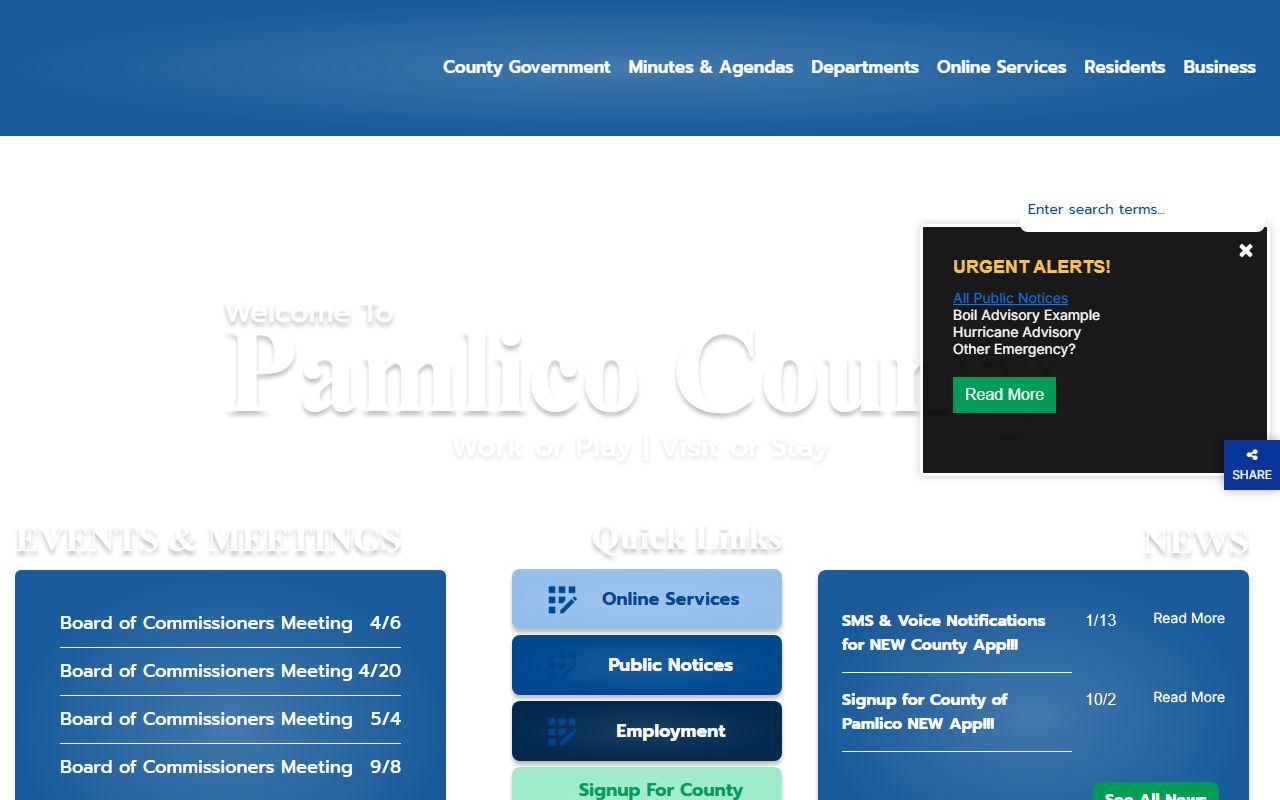
The Pamlico County website provides information about county offices and services. Check for online access to property search tools and tax data.
Search Pamlico County Property Tax Records
Visit the Tax Office in Bayboro to search Pamlico County property tax records in person. Bring your property address or parcel number. Staff can look up your records and print copies. Phone inquiries are accepted for basic questions.
Pamlico County property tax records contain the following:
- Owner name and mailing address
- Land and building assessed values
- Tax rate and district
- Annual tax amount
- Payment status and history
The North Carolina Department of Revenue oversees all county tax offices to ensure uniform assessment standards. Pamlico County follows the same rules as every other county in the state. All property must be assessed at 100% of fair market value.
Note: Waterfront properties in Pamlico County may show higher values due to the premium that water access adds to market price.
How Pamlico County Calculates Property Taxes
The formula is simple. Take the assessed value. Divide by 100. Multiply by the tax rate. That is your Pamlico County tax bill. Properties in towns pay an additional municipal rate on top of the county amount.
January 1 is the tax lien date in Pamlico County. That date sets the value for your annual tax. Bills go out in August. Payment is due September 1. Taxes become delinquent on January 6 of the next year. Interest charges start at 2% plus 0.75% per month after the delinquency date. Pamlico County can pursue foreclosure under G.S. 105-374 for unpaid taxes. Property owners should check their Pamlico County property tax records to verify the billed amount is correct each year.
Pamlico County Tax Assessment Appeals
You can appeal your assessed value in Pamlico County through a three-step process. First, contact the Tax Office for an informal review. Staff will check your property data and compare it to similar parcels. Many issues resolve at this step.
If the informal review does not settle the matter, appeal to the Pamlico County Board of Equalization and Review under G.S. 105-322. The board meets in the spring. Present your case with evidence such as comparable sales or a private appraisal. The board makes a binding decision on your value.
The final appeal goes to the North Carolina Property Tax Commission under G.S. 105-288. This state-level body hears cases from all counties. Very few Pamlico County appeals reach this point. Most disputes resolve during the first two steps of the process.
Property Tax Relief in Pamlico County
Pamlico County offers several tax relief programs. Applications are due by June 1 each year on Form AV-9. The Tax Office can help determine your eligibility.
The Elderly or Disabled Exclusion under G.S. 105-277.1 assists homeowners age 65 and older or those who are totally disabled. The Circuit Breaker program under G.S. 105-277.1B limits taxes based on income for qualifying elderly or disabled Pamlico County residents. Disabled veterans can receive a $45,000 exclusion on their assessed value. The Present-Use Value program under G.S. 105-277.2 provides reduced assessments for farmland, forestland, and horticultural land. Land gets taxed at its current agricultural use value instead of what it would sell for on the open market. This program serves many Pamlico County landowners with working farms or timber tracts.
Approved programs update your Pamlico County property tax records once the Tax Office processes the application.
Pamlico County Revaluation
G.S. 105-286 requires counties to revalue property at least every eight years. Pamlico County follows this schedule. During revaluation, the Tax Office reviews every parcel and sets new assessed values based on current market data. Waterfront properties, residential parcels, farmland, and commercial sites all get updated values.
After revaluation, Pamlico County property owners receive notices showing their new assessed value. Compare your new value to the old one in your tax records. If you think the new value is wrong, appeal within the period set by the Board of Equalization and Review. The county tax rate may change after revaluation to keep total revenue in line with the Pamlico County budget.
Between revaluation years, the Tax Office still tracks changes to individual parcels. New construction, land splits, and demolitions all result in updated values. These adjustments keep Pamlico County property tax records accurate throughout the full revaluation cycle.
Nearby Counties
These counties border Pamlico County. Tax rates and assessment practices vary across North Carolina. Confirm your property location to search the right county records.