
Pasquotank County Tax Records
Pasquotank County property tax records are maintained by the Tax Office in Elizabeth City, North Carolina. Elizabeth City is the county seat and the largest city in the county. The Tax Office handles property assessments, billing, and collections for all taxable parcels in Pasquotank County. Property owners can search records for assessed values, tax rates, and payment history. Pasquotank County sits in the northeastern corner of the state along the Pasquotank River and Albemarle Sound, with a mix of waterfront, residential, commercial, and agricultural property on the tax rolls.
Pasquotank County Quick Facts
Pasquotank County Tax Office
The Pasquotank County Tax Office appraises and assesses all property in the county. Staff work under the North Carolina Machinery Act and G.S. 105-289. The office is in Elizabeth City. They process tax payments, maintain assessment records, and assist property owners with questions about their tax bills or property values.
Elizabeth City is the commercial center of Pasquotank County and the broader Albemarle region. The city has a mix of historic homes, newer developments, and commercial property. The Coast Guard base also contributes to the area. Outside Elizabeth City, Pasquotank County has farmland and rural residential parcels. All taxable property is assessed at 100% of fair market value as of January 1 each year.
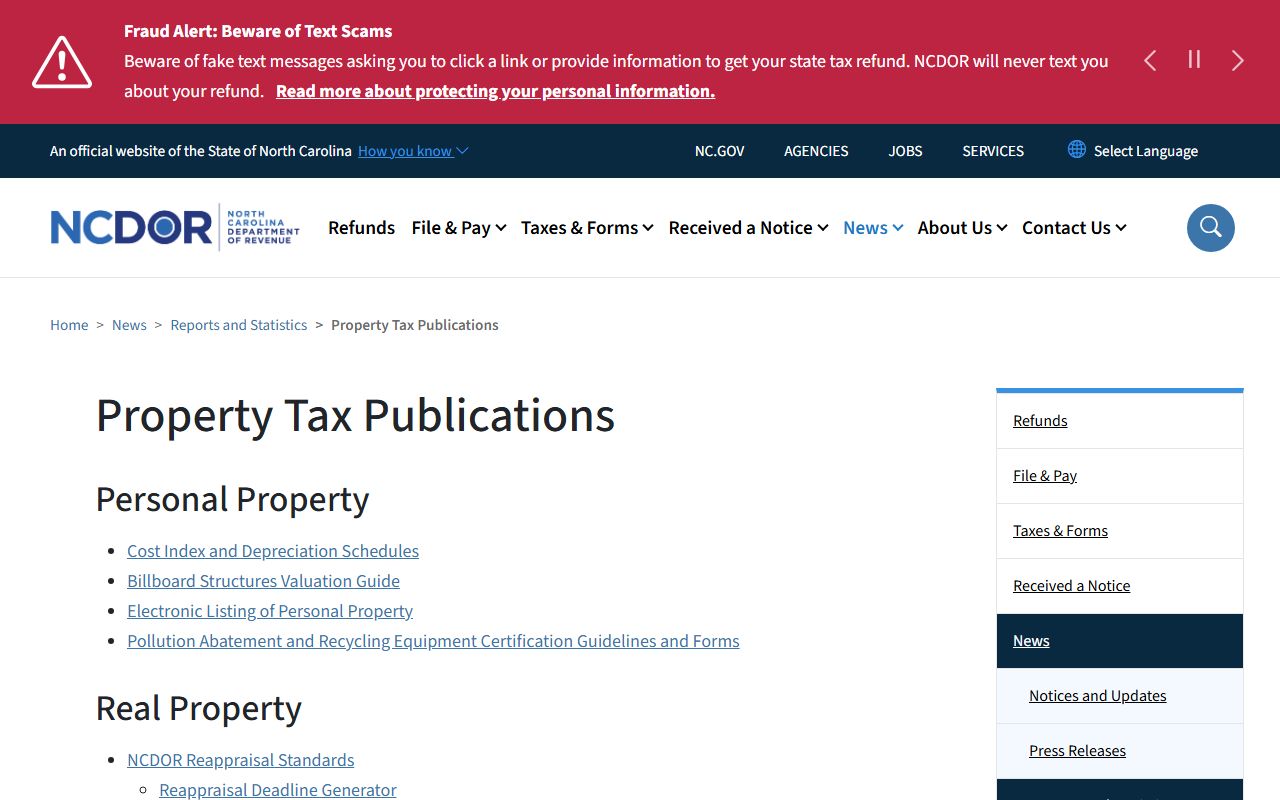
The North Carolina Department of Revenue supervises all county tax offices through the Property Tax Division. This ensures Pasquotank County follows the same assessment standards as every other county.
Search Pasquotank County Property Tax Records
You can search Pasquotank County property tax records at the Tax Office in Elizabeth City. Bring your property address or parcel ID number. Staff can look up records and print copies. Phone inquiries work for basic questions about Pasquotank County parcels.
When searching property tax records, you will find details such as:
- Owner name and mailing address
- Assessed value of land and buildings
- Tax district and rate
- Annual tax bill amount
- Payment history and balance due
Pasquotank County may offer online property search tools through the county website. Check for a portal that allows you to look up parcels by owner name, address, or parcel number. Online records provide quick access to assessed values and tax data from any device.
How Pasquotank County Calculates Taxes
The tax formula is the same across North Carolina. Divide the assessed value by 100. Multiply by the tax rate. That is your annual county tax. Properties in Elizabeth City pay a municipal rate on top of the Pasquotank County rate.
January 1 is the tax lien date. Your property value on that date sets the bill for the fiscal year. Tax bills go out in August. Payment is due September 1. Taxes become delinquent on January 6 of the following year. Interest and penalties apply after the delinquency date. Pasquotank County can pursue collection through foreclosure under G.S. 105-374 for taxes that remain unpaid over time.
Note: Check your Pasquotank County property tax records each year to verify the billed amount matches your property details.
Pasquotank County Property Tax Appeals
Property owners in Pasquotank County can appeal assessed values. The process has three levels under North Carolina law.
Start with an informal review at the Tax Office. Explain your concern and provide any supporting evidence. Staff compare your property to similar Pasquotank County parcels and may adjust the value. Many disputes resolve at this stage without a formal hearing. If the informal review does not work, file an appeal with the Pasquotank County Board of Equalization and Review under G.S. 105-322. The board meets in the spring. Present your case with comparable sales data or an independent appraisal.
The final step is the North Carolina Property Tax Commission under G.S. 105-288. This is a state-level review body. Few Pasquotank County cases reach this stage because most appeals get resolved during the first two steps.
Tax Relief in Pasquotank County
Pasquotank County administers several property tax relief programs for qualifying residents. Applications are due June 1 each year on Form AV-9.
The Elderly or Disabled Exclusion under G.S. 105-277.1 helps homeowners age 65 and older or those with total disability. Income limits apply. The Circuit Breaker under G.S. 105-277.1B caps taxes based on income for qualifying elderly or disabled Pasquotank County residents. Taxes above the cap get deferred until the property transfers. Disabled veterans receive a $45,000 exclusion on assessed value.
The Present-Use Value program under G.S. 105-277.2 reduces assessments for farmland, forestland, and horticultural land. Land gets taxed at its current agricultural value rather than market value. Many Pasquotank County landowners with working farms benefit from this program. The Tax Office processes all applications and updates your Pasquotank County property tax records once approved.
Pasquotank County Revaluation
G.S. 105-286 requires revaluation at least every eight years. Pasquotank County follows this cycle to update assessed values for all parcels. During revaluation, the Tax Office reviews sales data, construction costs, and market trends to set new values. Waterfront parcels, residential homes, farmland, and commercial properties all get reassessed.
After revaluation, property owners receive notices with updated values. Compare your new value to the previous one in your Pasquotank County property tax records. If you disagree, file an appeal during the designated period. The county tax rate may adjust after revaluation to balance revenue with the updated total assessed value across Pasquotank County.
Between revaluation cycles, the Tax Office updates values for individual parcels when changes occur. New construction, renovations, land splits, and demolitions all trigger adjustments. These updates keep Pasquotank County property tax records accurate throughout the full eight-year revaluation cycle.
Nearby Counties
These counties border Pasquotank County. Property tax rates and revaluation schedules vary across North Carolina. Check your property location to confirm which county handles your tax records.